

*This post contains affiliate links and may earn commissions on recommended products. As an Amazon Associate, I earn from qualifying purchases.
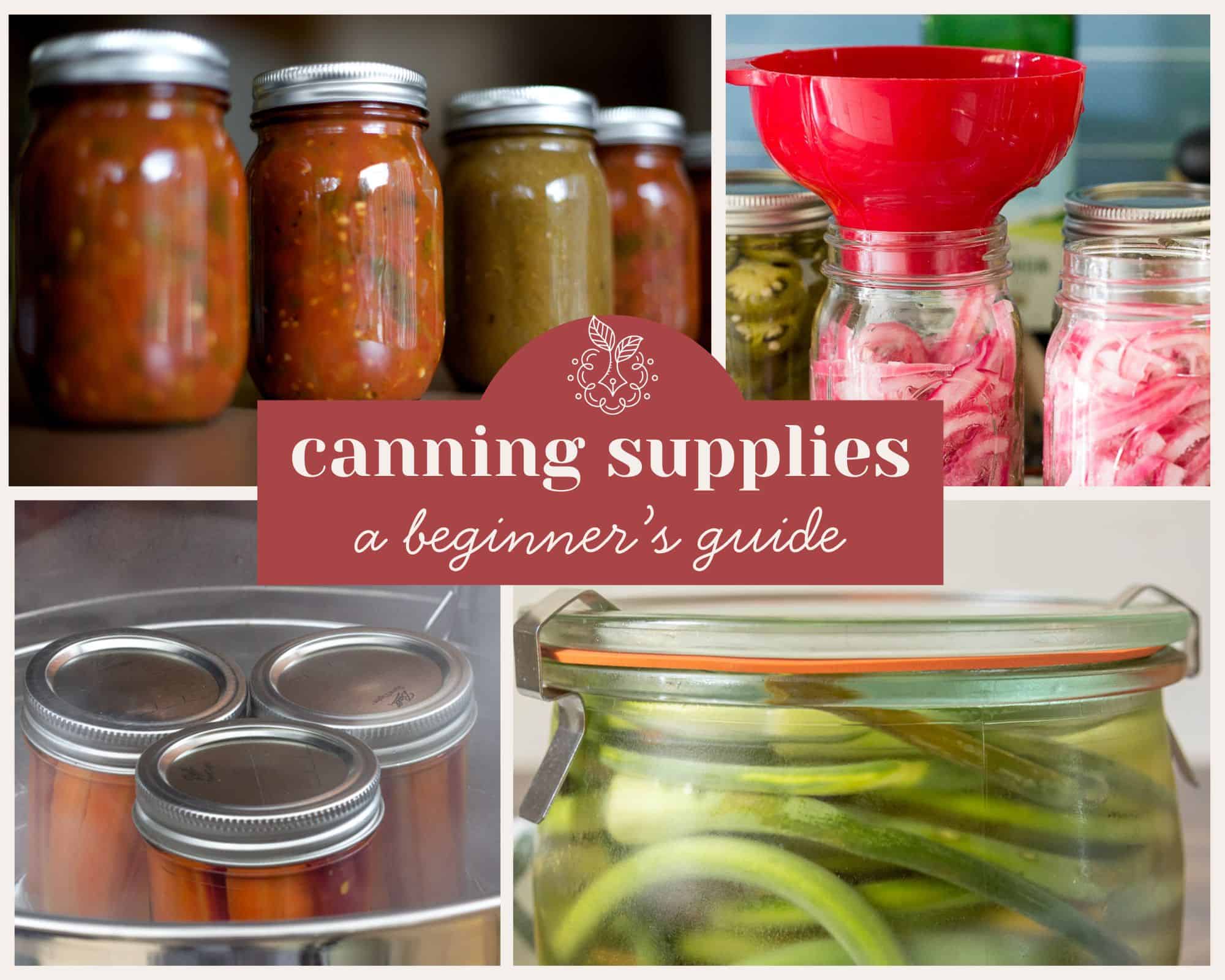
Want to get started with home canning? Read this guide for all of the info you need on the essential canning supplies to get your pantry stocked!
Want to save this recipe for later?
Summer’s here and that means it’s the height of canning season! With all of the fresh fruits and vegetables practically jumping into your arms, it’s the perfect time to try your hand at preserving.
Food preservation has come a long way since our great-grandparents’ time. While it might not be as necessary for survival, there’s nothing quite as satisfying as enjoying the fruits (and vegetables) of your labor.
With the change of time, the methods of canning have also changed a bit. Packing jars with cotton or oven canning are no longer considered safe. You’ll want to use the tested standards to safely preserve your harvest!
No matter your experience level, you’ll need some equipment for canning at home. Even if you are only making refrigerator pickles or jams, many of these canning tools will come in handy!
Glass mason jars
Ball jars are the standard for home canning. They are easily found in chain grocery stores and farm supply stores, especially in the summertime.
You can also find other brands such as Kerr, Bernardine, Atlas, and more. Jars for canning are available year-round, but many stores stock extra in the summertime.
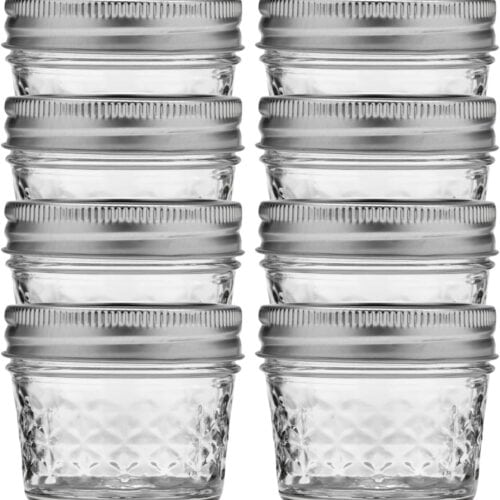
Mason jars * come in both regular mouth and wide mouth, with smooth or quilted sides.
Wide mouth jars have openings that are the same width as the rest of the jar, while regular mouth jars have a slightly smaller opening.
You can find glass mason jars in many sizes. The most popular sizes for canning are 4 ounces, 8 ounce (half pint), 16 ounce (pint), 32 ounce (quart), and 64 ounce (half gallon).
What about Weck jars?
Weck jars * are different from mason jars in that they have a glass lid with a rubber ring and clamps to create the seal. The rubber rings need to be replaced each time for canning, but you can reuse the other parts of the jar.
canning jars
 Buy Now →
  Buy Now →
  Buy Now →
 *
Jar lids and rings
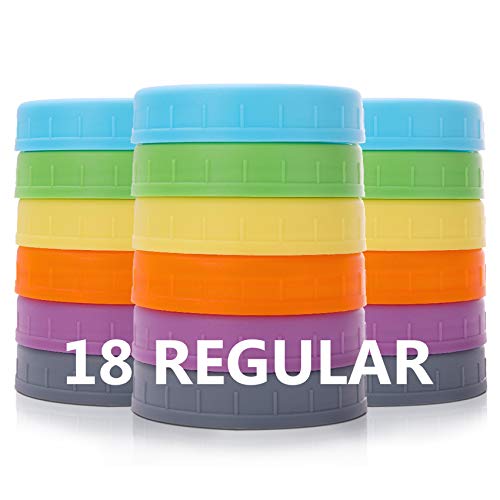
Canning requires using either a single or two-piece lid system. Most canners use the two-piece system, as glass mason jars are sold with this kind of lid, and it’s easy to buy packs of just the flat lid when reusing jars.
The lid is a flat piece with glue around the inside edges. The canning ring (band) fits over the lid, screwing onto the jar to help create the seal during the canning process.
As the jars seal, the lid will make a pinging noise as it inverts, creating a divot in the lid.
Can you recycle canning lids and rings?
Yes, canning lids and rings can be recycled along with your regular recycling.
Make sure to rinse off any food from the lids and rings before recycling.
Can you reuse canning lids and rings?
Canning lids cannot be reused due to the glue on the edges. Once the jar lid is heated, the glue softens and sticks to the jar, helping to create the seal.
While it might be tempting to reuse the lid, the glue may not properly seal the jars again, making it unsafe to store in the pantry.
Jar lids can be purchased separately from jars, making it easy to replace the lids as needed.
If you are only using your mason jars to store dry goods or refrigerator items, the canning lids can be reused. However, a better option for this would be to use plastic reusable jar lids *.
Rings can be reused many times. However, make sure to check the inside of each ring and discard any that have signs of rust.
Canning pot
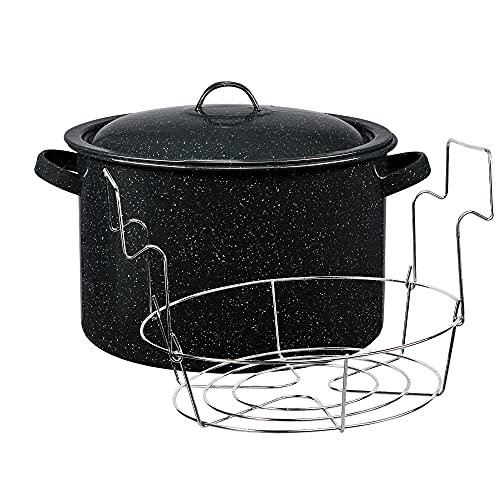
A large pot is essential for processing your jars. Granite Ware canning pots are the most common, however, if you have an induction stove it most likely will not work. Instead, you’ll need a pot like the Harvest Stainless Steel Multi Use Canner *.
You can also use any other large pot that is at least 20 quart capacity, but you will need an insert to prevent the jars from resting on the bottom. (See the next section on canning racks.)
Pressure canners work differently than water bath canners. You can check out this guide on using pressure canners from the University of Georgia Extension.
Canning rack
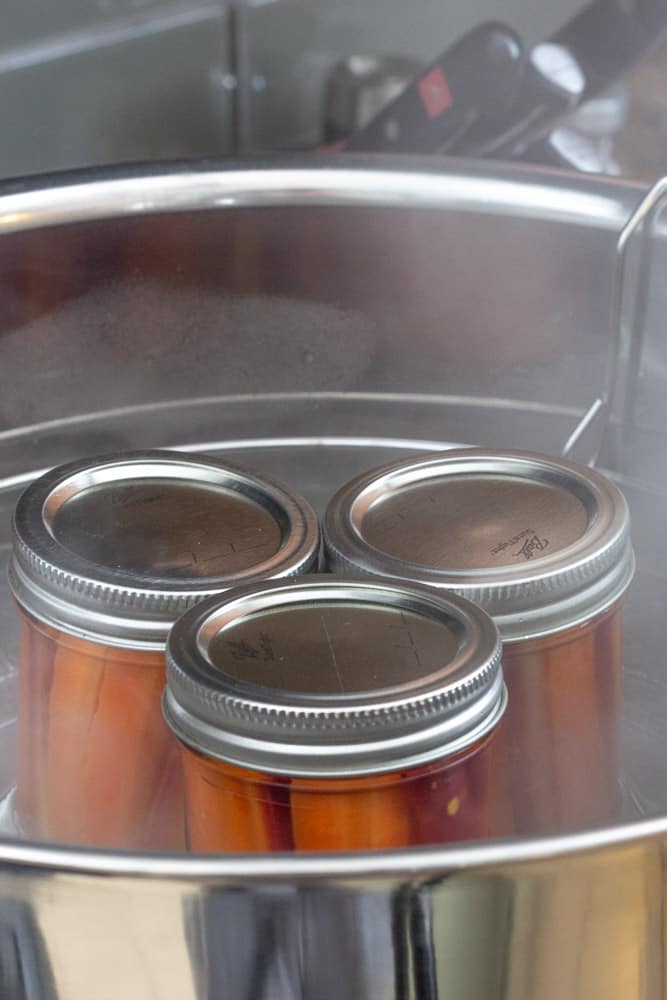
A canning keeps the jars corralled within the pot, keeps the water circulating on all sides, and prevents the jars from sitting directly on the bottom of the pot. Most racks have handles that allow you to hook them onto the sides of the pot so you can easily add or remove jars. If you buy a special canning pot, most come with racks.
If you do not have a canning rack *, you can create a makeshift one by using twist ties to bind canning rings together. A round wire baking rack will work as well, provided the rack is large enough to hold all of the jars on top.
Jar lifter/canning tongs
A jar lifter is used for transferring jars into and out of the hot water bath. These go by both names: jar lifter and canning tongs *. (Note that many canning kits also come with regular metal tongs; these are for removing empty jars from the water bath when sterilizing.)
A jar lifter has rubber on both sides: the curved ends are used for the jars, and the straight ends are for your hand.
Do not attempt to lift heavy, hot jars without one! Regular tongs do not work as they are not properly shaped and cannot grip as well.
 Buy Now →
  Buy Now →
  Buy Now →
  Buy Now →
  Buy Now →
Harvest Stainless Steel Multi Use Canner
Buy Now →*
Jar funnel
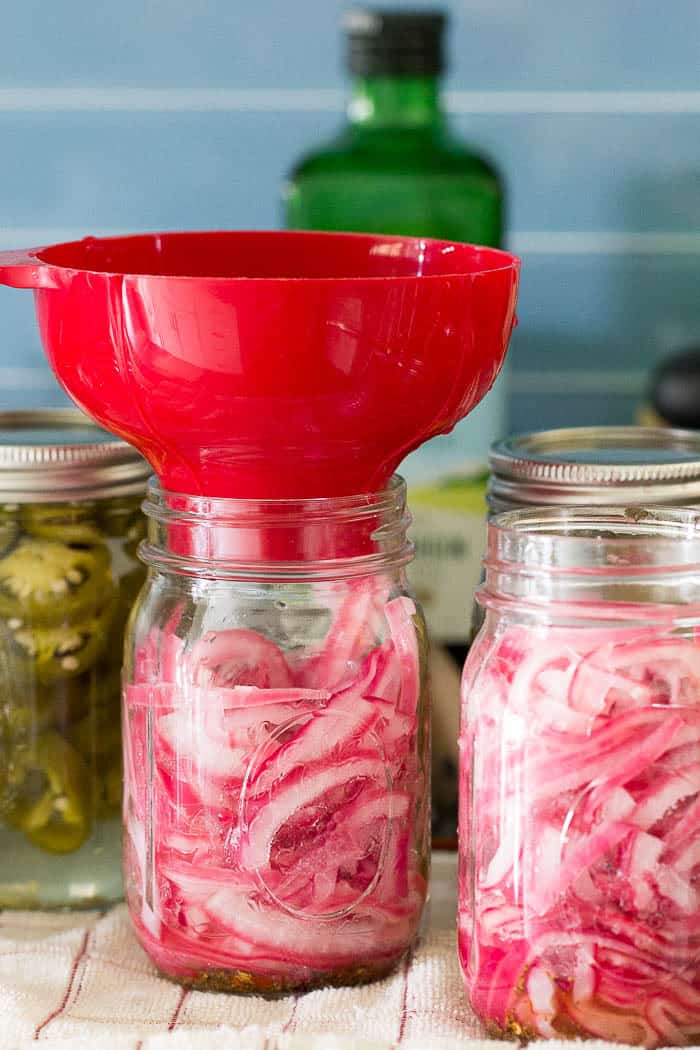
My wide-mouth funnel * is one of my most used items in my kitchen! It’s essential for filling jars without making a mess.
You don’t need a specific canning funnel, but you will want one with a large mouth to allow jams and sauces to easily flow in. It should also fit easily on the top of both regular mouth and wide-mouth jars without needing to hold it in place.
Canning jar wrench
A jar wrench helps tighten the bands. Because the bands are only meant to be screwed fingertip-tight, I don’t use one. However, this is a good tool for those who have trouble with grip.
Bubble popper
A bubble popper is a simple plastic stick that comes in canning kits. Use it to remove any trapped air in filled jars before sealing and processing.
Many bubble poppers also have marks to help determine fill lines on jars.
If you don’t have one, a wooden kitchen dowel or chopstick also works for popping air bubbles. Do not use a knife, which can create tiny scratches on the jars and eventually cause cracking.
Magnetic lid lifter
The lid lifter is used for removing gummed lids from hot water. You no longer need to heat the lids before canning, so a lid lifter isn’t a necessary tool anymore. However, you might still see them in canning accessories kits.
Ladle
An absolute must for transferring from pot to jar! You don’t need to go out and buy a special ladle for canning; just use your soup ladle!
If you don’t have a ladle, a large measuring scoop will also work. However, the longer handle on the ladle makes it easier to scoop and not burn your fingers on hot jams or sauces.
What is pectin?
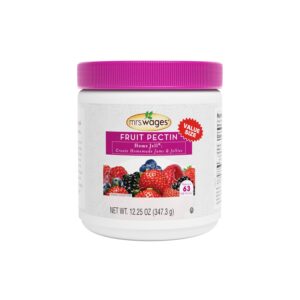
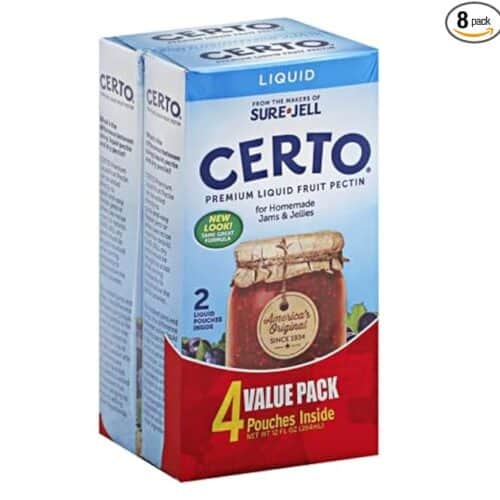
Pectin is a naturally occurring plant fiber that helps thicken jams and jellies. Some fruits, like apples and cranberries, are high in pectin and do not need it added for gelling, while others like strawberries and peaches benefit from an extra boost.
You can find pectin in stores as either powdered or liquid. Liquid pectin * is good for making clear jellies, while powdered pectin is good for chunkier jams and spreads.
What is Clear Jel?
Clear Jel * is used for thickening pie fillings and other sauces. Unlike pectin, it is a modified cornstarch.
There are two kinds of Clear Jel: cook type and instant. The cook type must be activated with heat, making it perfect for canning recipes. Instant Clear Jel thickens without heat and is used for uncooked fillings or pudding.
Pectin and Clear Jel are not interchangeable!
 Buy Now →
  Buy Now →
  Buy Now →
 *
What is pickling/canning salt?
Pickling salt is simply a fine grain salt. It is sometimes sold as canning salt. This salt dissolves very easily in liquids, making it perfect for pickle brines in both cooked and refrigerator pickles.
You can find pickling salt at most large grocery stores, or at hardware stores if they have a canning section.
Does canning salt go bad?
Canning salt is sold in large boxes of 1 pound or more, so it’s easy to worry that it will go bad before you use it all. However, salt does not expire! Store it in a cool, dry place.
If you have a big box of it, I recommend storing it in a large jar or other airtight container rather than the cardboard box it comes in. This will help keep it dry and free of clumps. If you do get a few clumps, just break them up with a fork.
Pickling spice
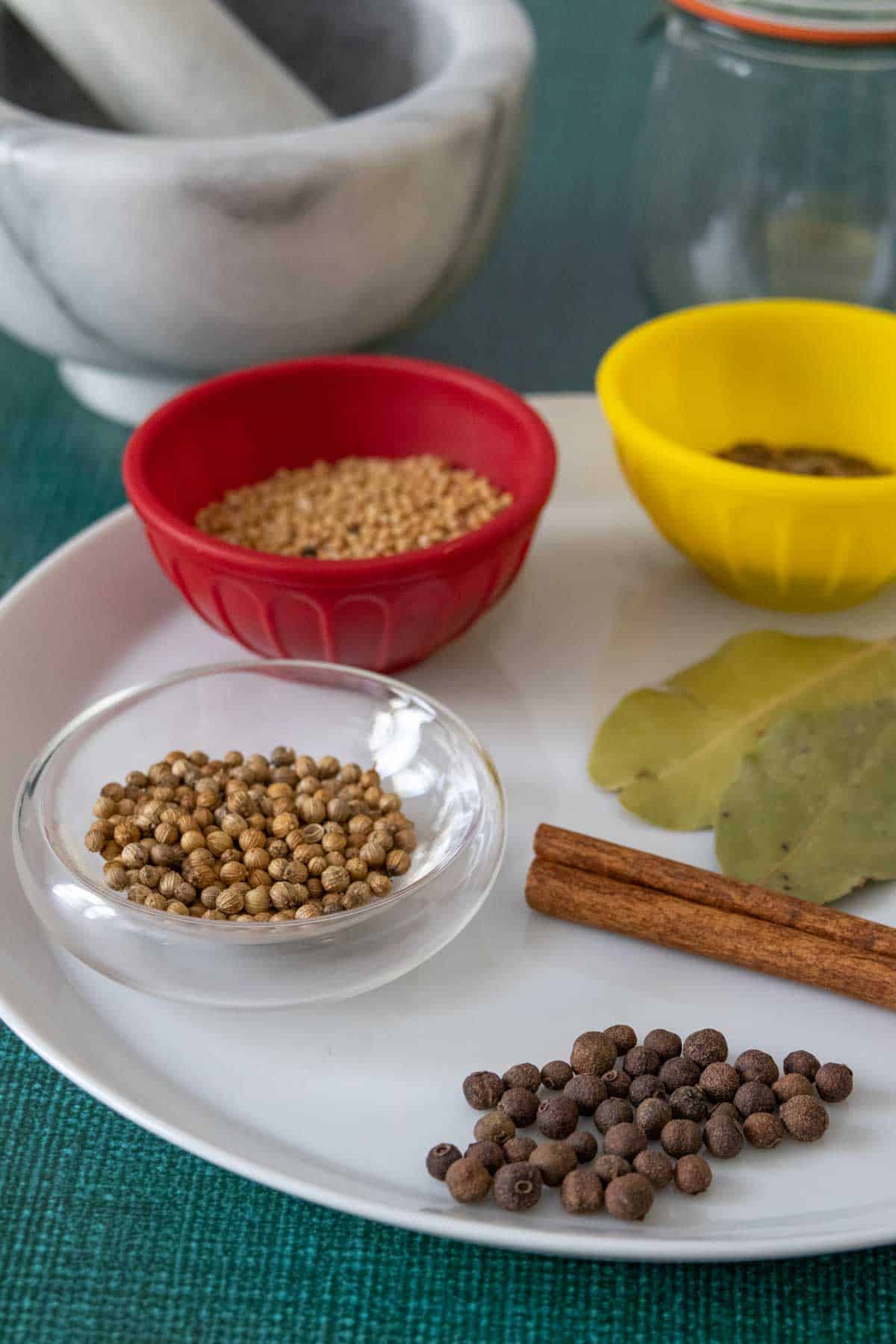
If you’re making pickles, you’re going to need pickling spice. Now, this can vary quite a bit depending on how you want to flavor your pickles, but most blends include a combination of black peppercorns, dill or celery seed, mustard seed, bay leaf, and red pepper flakes. Some also have coriander, cinnamon stick pieces, cloves, or allspice.
Most grocery stores sell pickling spice either in the canning or spice section, but you can also make homemade pickling spice with ingredients you probably already have. It’s much more affordable and simple to customize.
Beginner Canning Recipes
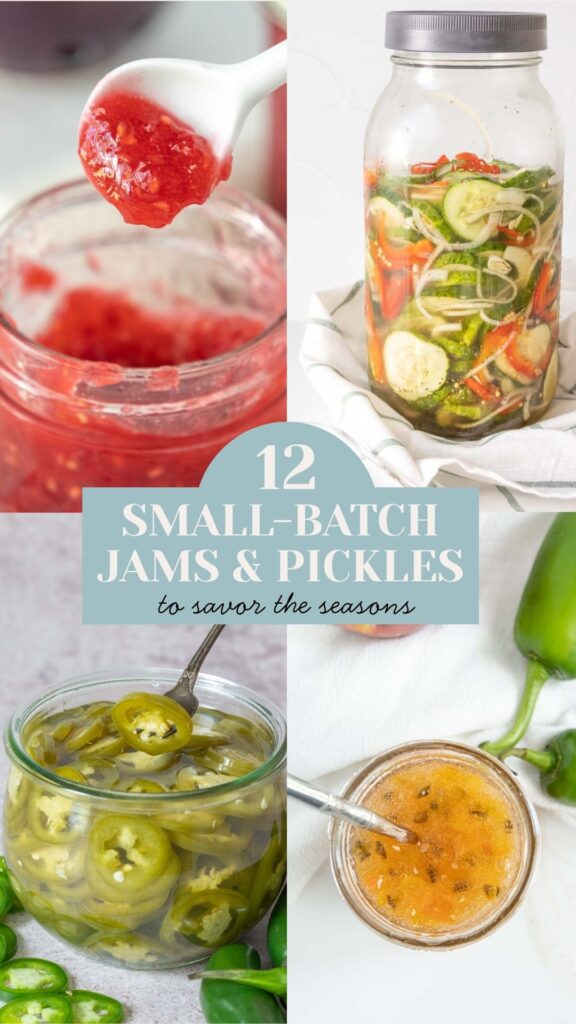
Have all of your home canning supplies on hand? Try out small-batch plum jam, easy dilly beans, or homemade pizza sauce. You can also check out my collection of small-batch jams and pickles!
Once you’ve learned how to preserve your vegetables and fruits, you’ll look forward to it each summer. There’s nothing like cracking open a jar of homemade strawberry jam in winter!

About Megan
I learned how to cook by exploring seasonal ingredients, and you can too! Meal time shouldn’t be stressful or complicated, and with fresh ingredients and easy methods, I’m here to help you enjoy the time spent in the kitchen. Read more…